The Ultimate Checklist: Wedding Cake Venue Setup Requirements
Don't let your dream cake become a nightmare! Our essential checklist covers all wedding cake venue setup requirements to ensure a flawless display.
Olivia Bennett
You’ve found the perfect wedding cake—a stunning centerpiece that tastes as good as it looks. But before your baker can work their magic, there's a crucial conversation you need to have with your venue. Ensuring they can accommodate your cake is a key step often overlooked in the planning frenzy. This guide outlines the essential wedding cake venue setup requirements to discuss, guaranteeing your sweet centerpiece gets the debut it deserves.
Key Coordination Before Delivery Day
Seamless cake delivery starts with clear communication. Long before the wedding, you or your baker should confirm several key details with the venue's event manager. Miscommunication here can lead to last-minute stress nobody wants.
- Delivery Window: When is the ideal time for the cake to arrive? Some venues have strict receiving hours. Your baker will need a specific timeframe and a clear path for delivery, especially for large, multi-tiered creations.
- Designated Contact: Who at the venue will be the point person for the delivery? Provide their name and phone number to your baker. This ensures someone is ready to receive the cake and direct the baker to the setup location.
- Access Route: Confirm the best entry point for delivery. Is there a loading dock? A service elevator? Your baker in Austin, TX, for example, will need to know the most direct and stable path from their van to the cake table to avoid any bumps along the way.
The Perfect Stage: Cake Table & Display Location
The placement of your cake is about more than just photos; it’s about safety and preservation. Discuss these points with your venue coordinator to choose the perfect spot.
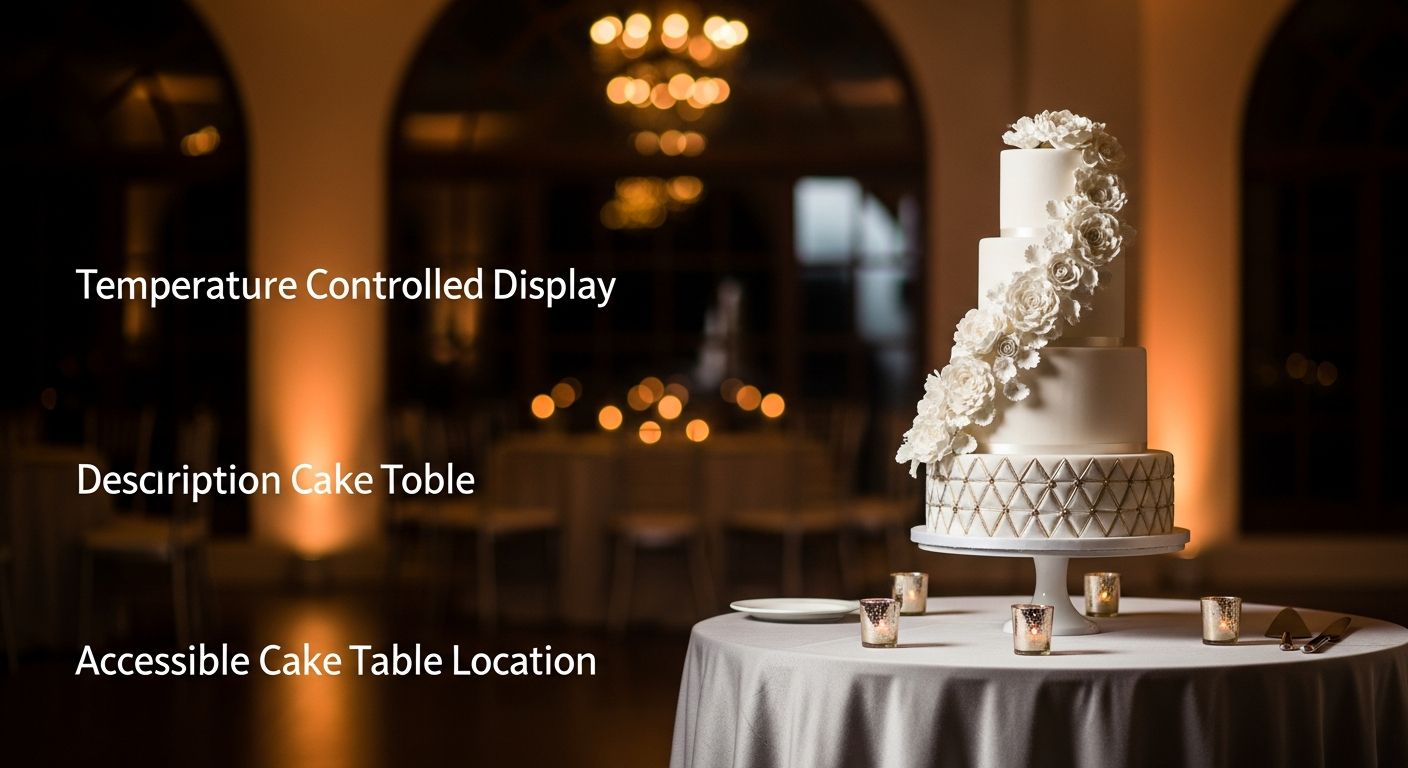
- Table Provision & Stability: Does the venue provide a dedicated cake table? Confirm its size and, most importantly, its stability. A wobbly table is a recipe for disaster. It should be placed away from high-traffic areas, dance floors, and doorways.
- Location, Location, Location: The cake should never be placed in direct sunlight, near a heat source like a fireplace, or under an air conditioning vent. Fluctuating temperatures can cause fondant to sweat and buttercream to melt.
- The Backdrop: What will be behind your cake? A stunning floral wall or a simple, elegant backdrop can elevate the entire display. The right setting can make a simple, modern wedding cake look incredibly chic. If you're still exploring what style best fits your venue's vibe, our wedding cake quiz can provide some fun inspiration.
Technical & Logistical Wedding Cake Venue Setup Requirements
Beyond the table, there are technical needs that are critical to a successful cake setup. These are the non-negotiable wedding cake venue setup requirements you must confirm.
- Refrigeration: Does any part of your cake require refrigeration? Cakes with delicate fillings like mousse, fresh cream, or cream cheese frosting may need to be kept cool until just before serving. Ask your venue if they have available space in a commercial refrigerator. Do not assume they do!
- Power Access: If your cake design includes lighting, a rotating stand, or a small water feature, you'll need access to a power outlet. Ensure one is close enough to the table to avoid running unsightly and dangerous extension cords across the floor.
- Venue Restrictions: Does your venue have rules about decorations? Some prohibit open flames (which means no real candles on the cake) or sparklers for the cake-cutting moment. It's always better to ask beforehand.
The Grand Finale: Cutting & Serving
Your guests are eagerly awaiting a slice, but who is going to serve it? Clarify the process to ensure everyone gets a piece of the deliciousness.
- Who Cuts the Cake? This is the most important question. Is it the venue staff, the caterer, or does your baker offer this service for an additional fee? Never assume someone will do it. This task requires a practiced hand to properly portion the tiers.
- Cakeage Fees: If you're using an outside baker (not the venue's), ask if there is a "cakeage fee." This is a per-person or flat fee the venue may charge for cutting and serving the cake.
- Tools & Tableware: Confirm who provides the cake stand, serving knife and server, plates, and forks. While many bakers provide a disposable board, specialty stands are often rented separately. Many couples prefer to use a special serving set, but the venue or caterer will handle the rest.
- Saving the Top Tier: Designate a person (e.g., your wedding planner or a family member) to be responsible for the top tier. Who will provide the box, and who will pack it up and ensure it gets home with you safely? The same goes for any leftovers. Finding a great professional baker on WeddingCakeHub is the first step, but following through on these venue details ensures their masterpiece is enjoyed by all.
Frequently Asked Questions
Who is usually responsible for cutting the wedding cake?
Typically, the catering staff or a designated venue coordinator is responsible for cutting the wedding cake. However, this is not always included. You must confirm with your venue or caterer beforehand. Some bakeries offer a cutting service for an additional fee.
Does my wedding cake need to be refrigerated at the venue?
It depends on the cake's ingredients. Cakes with buttercream can usually sit at a cool room temperature. However, cakes with delicate fillings like mousse, whipped cream, or cream cheese frosting often require refrigeration. Always confirm the cake's specific needs with your baker and check if the venue has available fridge space.
What if my venue doesn't provide a cake table?
If your venue doesn't provide a dedicated cake table, you will need to source one from your rental company. Ensure it is a sturdy, level table appropriate for the weight and size of your cake. Discuss placement with your venue coordinator.
How early should the wedding cake be delivered?
Most bakers prefer to deliver the wedding cake 1-3 hours before the reception begins. This allows ample time for setup, final touches, and any minor repairs needed after transport. Coordinate the exact delivery window between your baker and the venue contact person.
Who provides the cake stand and serving set?
Cake stands are typically rented from the baker, a rental company, or sometimes provided by the venue. The decorative serving knife and server set is usually provided by the couple. The plates and forks for serving are provided by the caterer or venue.
Written by Olivia Bennett
Wedding Planning Expert at WeddingCakes Hub. Helping couples find their perfect wedding cake.
Sponsored
BakeOnyx AI — AI-Powered Cake Design Tools
Turn your cake vision into reality — generate custom designs, get instant pricing estimates, and streamline your baking workflow with AI.
Learn more →You May Also Like
How to Write Perfect Wedding Cake Cutting Instructions for Caterers
Don't leave your beautiful wedding cake to chance! Our guide provides clear wedding cake cutting instructions for caterers to ensure perfect slices for every guest.
Jul 2, 2026
Beyond Delivery: Ensuring Your Wedding Cake Looks Picture-Perfect All Reception
Worried about your cake wilting? Our expert guide offers actionable tips for ensuring your wedding cake looks picture-perfect all reception long, from reveal to last dance.
Jun 30, 2026
Sweet Stories: Creative Wedding Cake Story Card Ideas
Discover elegant wedding cake story card ideas to share the meaning behind your design. Learn what to write and how to display your cake's unique story.
Jun 28, 2026
Looking for a wedding cake baker?
Browse our directory to find the perfect baker near you.
Find Bakers